- Welcome to Hardik International Pvt. Ltd.

Hip Prosthesis Advances: Materials, Design, and Longevity
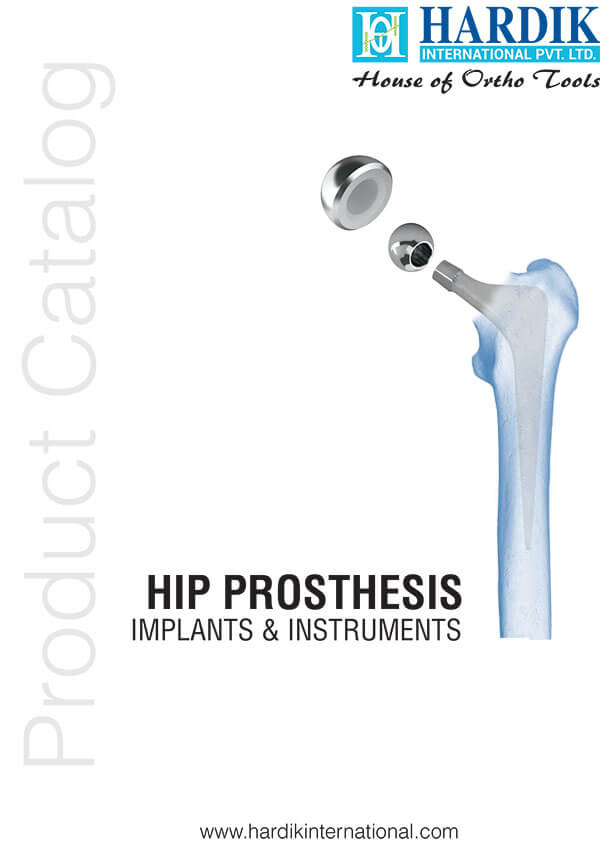
Long-term prosthesis survival determines clinical success in total hip arthroplasty, where material selection, design optimization, and manufacturing precision directly influence implant longevity and revision rates. Studies report survival rates exceeding 90% at 15–20 years and 70–80% at 25 years, yet achieving these outcomes requires engineering precision in material composition, surface treatments, and biomechanical design that accommodates diverse patient populations and anatomical variations. Factors including polyethylene wear rates, osteolysis progression, and fixation stability remain critical determinants of prosthesis durability, with wear rates declining from 0.26 mm/year in conventional polyethylene to 0.05 mm/year in highly cross-linked formulations, representing measurable advances in material science.
Hardik International operates under an ISO 13485:2016 quality management system and states CE marking for its hip prosthesis systems engineered from titanium alloys, cobalt-chromium components, and advanced bearing surfaces addressing the technical requirements of modern arthroplasty procedures. Founded in 1990, the company reports distribution networks spanning the Indian Subcontinent, Africa, Eastern Europe, and Latin America, delivering quality-managed orthopedic implants designed to meet international regulatory standards for joint reconstruction.
Evolution of Hip Prosthesis Technology
Historical Overview and Milestones
Early hip prosthesis systems utilized metal-on-polyethylene bearings with conventional ultra-high molecular weight polyethylene liners, establishing foundational principles for load transfer and joint stability. Subsequent material innovations introduced alumina ceramic femoral heads reducing polyethylene wear debris, followed by highly cross-linked polyethylene formulations addressing osteolysis concerns that historically limited prosthesis longevity.
Current Trends in Prosthesis Development
Contemporary prosthesis development emphasizes modular designs enabling intraoperative customization of offset, leg length, and femoral anteversion. Surface treatment advances such as plasma-spray coatings and hydroxyapatite applications enhance osseointegration in cementless systems, while metallurgical improvements in titanium alloy processing optimize mechanical properties for long-term implantation.
Fundamental Materials in Hip Prosthesis
Titanium Alloys
Titanium alloy (Ti-6Al-4V) conforming to ISO 5832-3 specifications constitutes the primary material for cementless femoral stems, providing biocompatibility, corrosion resistance, and elastic modulus properties that reduce stress shielding compared to cobalt-chromium alternatives. Studies note superior osseointegration characteristics with porous-coated titanium surfaces achieving bone ingrowth within 6–12 weeks postoperatively.
Cobalt-Chromium Alloys
Cobalt-chromium-molybdenum alloys conforming to ISO 5832-12 standards offer excellent wear resistance for modular femoral heads and acetabular components, maintaining dimensional stability under physiologic loading. The material’s high hardness helps minimize polyethylene wear particle generation in metal-on-polyethylene bearing couples.
Ceramic Components
Third-generation alumina ceramic and composite materials provide hardness values exceeding metallic alternatives, reducing polyethylene wear rates when paired with conventional or highly cross-linked liners. Ceramic-on-polyethylene bearings demonstrate documented wear rates between 0.05–0.10 mm/year, depending on polyethylene formulation and cross-linking density.
Polyethylene Liners
Highly cross-linked polyethylene undergoes radiation treatment followed by thermal processing, increasing cross-link density and reducing wear particle generation by approximately 80% compared to conventional formulations. Modern liners also incorporate antioxidant additives to prevent oxidative degradation that can compromise long-term mechanical integrity.
Material Properties and Clinical Performance
Biocompatibility and Corrosion Resistance
Titanium alloys demonstrate superior biocompatibility through stable oxide layer formation that limits metal ion release, whereas cobalt-chromium components require careful modular taper management to minimize fretting corrosion at junction interfaces. Material selection directly influences inflammatory response profiles and periprosthetic bone remodeling.
Mechanical Strength and Load Transfer
Cementless titanium stems transfer physiologic loads through proximal metaphyseal engagement, preserving bone stock via favorable load distribution patterns. Cemented cobalt-chromium stems provide immediate fixation stability through polymethylmethacrylate mantle stress distribution, offering advantages in osteoporotic bone scenarios.
Osseointegration and Bone Remodeling
Porous-coated titanium surfaces with pore sizes ranging 50–400 microns facilitate bone ingrowth achieving biological fixation early postoperatively. Hydroxyapatite coatings enhance osseointegration, though long-term data show comparable survival outcomes to plasma-spray titanium coatings at 15–20 years.
Wear Resistance and Particle Generation
Bearing surface combinations determine polyethylene wear performance, with ceramic-on-highly cross-linked polyethylene showing the lowest documented wear rates (~0.05 mm/year). Smaller wear particles (<1 micron) are more biologically active, emphasizing the importance of high-quality material processing to minimize osteolysis risk.
Prosthesis Design Innovations
Monoblock Versus Modular Designs
Modular prosthesis systems enable intraoperative adjustment of femoral offset, neck length, and version through interchangeable components, accommodating anatomical variability. Taper junction design specifications following ISO 7206 standards minimize fretting corrosion and modular junction failure observed in legacy systems.
Cemented Versus Cementless Fixation
Cemented fixation provides immediate mechanical stability with early postoperative comfort advantages, while cementless systems demonstrate superior long-term survival in younger patients through biological fixation. Meta-analyses indicate comparable 15-year survival when fixation choice aligns with patient bone quality and age.
Stem Geometry and Surface Treatments
Tapered wedge stem geometries achieve axial and rotational stability through metaphyseal press-fit engagement, while anatomic stem designs replicate native femoral geometry for natural load transfer. Plasma-spray titanium coatings (50–150 microns thick) optimize bone ingrowth while avoiding excessive coating debonding.
Acetabular Cup Advancements
Hemispherical acetabular cup designs with peripheral rim locking and multiple screw holes enhance press-fit stability during osseointegration. Highly cross-linked polyethylene liners typically maintain 6–8 mm thickness to prevent through-wear while sustaining mechanical integrity.
Longevity and Failure Modes
Factors Impacting Implant Lifespan
Registry data indicate improved 15-year survival rates—from 85% in 2009 cohorts to about 90% in 2021—attributed to material innovation, surgical refinements, and stricter manufacturing controls. Patient-specific factors such as age, activity level, and BMI remain key predictors of prosthesis lifespan.
Mechanisms of Wear and Loosening
Polyethylene wear particle–induced osteolysis remains a principal cause of late aseptic loosening, with biological bone resorption rather than mechanical failure being the dominant mechanism in modern implants.
Strategies to Minimize Revision Rates
Adoption of highly cross-linked polyethylene has reduced linear wear rates by up to 80% compared to earlier materials, significantly lowering osteolysis and revision incidence. Correct acetabular positioning within the Lewinnek safe zone (40°±10° inclination, 15°±10° anteversion) further minimizes edge-loading wear.
Regulatory Compliance and Quality Assurance
ISO, CE, FDA, and BIS Standards
ISO 13485:2016 certification validates quality management systems governing hip prosthesis manufacturing, encompassing material specifications, dimensional tolerances, and surface finish requirements. CE marking confirms conformity with the European Medical Device Regulation, demonstrating compliance with ISO 10993 biocompatibility and ISO 7206 mechanical testing standards.
For U.S. markets, device-specific FDA clearance or approval is required and should be verified per SKU.
Manufacturing Validation Processes
Hip prosthesis manufacturing employs validated CNC machining achieving tolerances within ±0.05 mm, followed by coating thickness and adhesion testing. Material certificates verify titanium alloy composition per ASTM F136 and ISO 5832-3 standards for medical-grade implants.
Sterilization and Traceability Protocols
Gamma irradiation sterilization validated under ISO 11137 achieves sterility assurance levels of 10⁻⁶ without altering metallic component properties. Laser-etched identification codes ensure traceability linking each implant to batch records, certificates, and sterilization validation data supporting post-market surveillance.
FAQ Section
Which material provides optimal prosthesis longevity?
Titanium alloy stems demonstrate superior osseointegration and reduced stress shielding, while highly cross-linked polyethylene liners reduce wear by about 80% versus conventional formulations, extending prosthesis lifespan.
How do modern designs improve stability?
Tapered wedge stem geometries achieve metaphyseal press-fit engagement for immediate stability, while porous titanium coatings facilitate bone ingrowth within weeks. Modular systems enable precise intraoperative adjustments.
How does certification impact product reliability?
ISO 13485 and CE certification validate manufacturing quality systems, material compliance, and sterilization controls, supporting consistent performance and mitigating risk from substandard production.
What factors influence prosthesis selection?
Patient age, bone quality, activity level, and anatomy determine fixation method and material choice. Cemented fixation favors osteoporotic bone, while cementless systems perform better in younger patients with healthy bone stock.
Hardik International’s Hip Prosthesis Portfolio
Hardik International Pvt. Ltd. states conformity to ISO 13485:2016 and CE marking for its hip prosthesis systems, combining material science advances with manufacturing precision for total hip arthroplasty. Founded in 1990, the company provides titanium alloy stems, modular femoral heads, and acetabular components serving reconstructive requirements across global healthcare markets.
Distribution networks spanning the Indian Subcontinent, South and West Africa, Eastern Europe, and Latin America support surgeons with certified, traceable implants built to international quality frameworks.
Explore the complete hip prosthesis portfolio at hardikinternational.com or contact the export team for specifications and supply arrangements. Hardik International maintains a commitment to arthroplasty excellence through certified production, traceability systems, and service-driven partnerships supporting orthopedic professionals worldwide.
Disclaimer: This content is intended for informational and professional reference only. It does not substitute official product documentation, regulatory filings, or clinical judgment. Specifications, availability, and approvals may vary by region. Always refer to the product’s approved Instructions for Use (IFU) and consult authorized medical professionals before application.